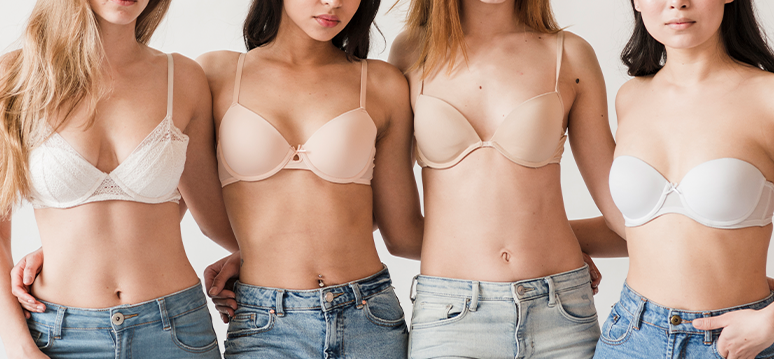
Breast look can change greatly between women, and it's perfectly normal to be curious about what's thought of as "standard." There's no single "right" breast shape; instead, we encounter a large range of differences. Elements like genetics, age, breast tissue composition, and even pregnancy can influence breast dimension and outline. Some women exhibit teardrop forms, others could find their breasts are more round, triangular, or even asymmetrical. Understanding these typical dissimilarities can assist in building body acceptance and addressing any concerns you may have.
Cone-Shaped Breasts: Features and Differences
Conical breasts, also sometimes described as pointed, represent a common chest form where the lower portion is relatively wide, gradually narrowing towards the apex. This appearance isn't a rigid standard; rather, it's a range with considerable unique differences. Variations might include a more slight taper, or a more marked projection. Factors such as ancestry, years, corporeal framework, and even standing practices can all influence the concluding look. Some women with conical breasts might furthermore notice a minor fall which contributes to the overall form. It’s important to note that chest form is incredibly manifold and what one person perceives as conical might be called differently by another individual – there's no single, precise explanation.
Cup-Shaped Mammary Regions: What You Need to Understand
Many women find that their busts have a distinctive bell-shaped shape. This doesn't generally a cause for concern, and is often just a common variation in chest anatomy. Usually, bell-shaped breasts are fullest at the base and steadily taper towards the nipple. While a few sources imply this outline can sometimes be linked with a particular body type, it's more possible a result of tissue distribution and genetics. If you have any concerns about your female outline or observe any changes, it's always advisable to consult with a doctor's expert.
- It's vital to remember that breast dimension and form can fluctuate over duration.
- Chest feeding and internal shifts can affect the appearance.
Exploring Curved Breasts: Anatomy and Appearance
The shape of round breasts is often linked with a certain physical formation. Typically, breasts with this form are characterized by a smooth curve, with a noticeable projection forward from the chest wall. This can be due to the arrangement of milk-producing tissue and adipose deposits. While breast volume differs greatly among women, the fullness often points to a higher proportion of fat tissue compared to muscular tissue, though heredity and general physical composition have a major function as well. It's vital to remember that there "ideal" breast form and diversity is lovely in its special way.
Asymmetrical Breasts: Causes and Considerations
Minor variations in boob size are incredibly common and often harmless. However, more pronounced asymmetrical busts can sometimes indicate an underlying cause worthy of attention. Several factors can contribute this occurrence, including endocrine fluctuations during puberty, childbirth, or climacteric. Past operation, such as a breast removal, or damage to one boob, can also create asymmetry. In rarer situations, it could potentially be related to a structural abnormality or a harmless growth. While most cases involve no therapy, it's always best to consult a healthcare professional to eliminate any worrying clinical concerns and discuss potential options for aesthetic adjustment if desired.
Delving into Drooping Mammary Tissue
Many individuals notice that their breasts have a downward appearance, particularly when viewed from the side. This form isn’t uncommon and is often influenced by things such as family history, breast tissue thickness, physical build, and even posture. While some may feel self-conscious about this feature, it's important to understand that chest contour varies significantly from woman to person, and sloping busts are simply one expression of this organic range. Consulting a healthcare professional can give more personalized details if there are any questions about chest well-being.
Defining 16th-Century Breasts: Definition and Features
The appearance of Elizabethan women’s chests is frequently portrayed in modern media. Unlike the modern notion of a smaller shape, Elizabethan women often possessed more ample chests. This wasn't necessarily due to natural factors, but was significantly shaped by fashion and dietary habits of the period. foundation garments, a common part of ladies’ attire, played a role in creating a upright torso, which visually highlighted the size of the bosoms. Furthermore, eating habits that was generally richer in calories than that of subsequent generations could have led to increased chest tissue. It's crucial to remember that variations existed, and few ladies possessed bosoms of the uniform shape.```
Grasping Sporty Breasts: What to Anticipate
Many women who engage in regular, demanding physical activity, particularly dynamic sports, may notice changes in the look of their breasts. Often, this isn't due to increased breast tissue; instead, it's a blend of factors including ligament stretching, tendon strengthening, and perhaps heightened blood flow. You could experience an awareness of bulk, a minor increase in chest size, or sometimes a temporary unease after especially exercises. While this is perfectly normal and typically benign, talking about any concerns with a medical practitioner is always recommended.
```### Understanding Axillary Breasts
Some women notice a condition often referred to as "side breasts" – essentially, additional breast development in the axillary region. It's important, this isn't always a complete breast; it's frequently made up of dense tissue and might sometimes have a small amount of breast glandular tissue. The appearance can vary greatly, from a soft lump that's difficult to detect to a larger area. This issue is resulting from various factors including hormonal changes, body composition, genetics, and sometimes surgical interventions. It is always to see a doctor to get an accurate diagnosis the nature of any abnormalities and exclude more serious health issues.
Dealing with Ptotic Breasts: Questions About Sagging Concerns
Many individuals experience a loss of breast firmness at some point in their lives, often as a natural consequence of years, pregnancy, breastfeeding, or substantial weight fluctuations. This issue, commonly known as ptosis, can impact confidence and lead to feelings of self-consciousness for some. While various lifestyle habits, such as maintaining a good lifestyle and engaging in regular physical activity, can help support breast elasticity, procedures like mastopexy are often considered for a more noticeable and lasting solution. It's important to discuss your choices with a board-certified plastic surgeon to assess the best plan for your unique circumstances. Besides, understanding the underlying causes of dropped breasts can help you make responsible decisions regarding your breast care.
The Guberini Breasts: A Rare Variation
Guberini breasts, also known as polythelia chest variations, represent an extraordinarily seldom anatomical anomaly. This condition is characterized by the presence of supernumerary breast tissue, typically located beneath the normal breast placement, extending in a lower direction. While the precise origins remain largely obscure, it is generally believed to be related to abnormal development during embryonic life. Diagnosis is usually made through physical examination and can be verified with imaging techniques like ultrasound. The presence of Guberini breasts doesn't inherently indicate any medical problems, though routine monitoring is recommended and, in some circumstances, surgical excision may be considered for cosmetic reasons or to address any associated issues. It’s a true testament to the incredible diversity of human anatomy.
Understanding Cone-shaped Breasts: The Shape
The tubular breast structure is characterized by a straight look, often lacking the common fullness linked with other chest variations. Numerous women genetically possess this unique structure, and it’s important to note that it's a utterly typical difference in female build. Details like genetics, breast density, and tissue arrangement can each impact the general appearance but play a role to forming this distinct outline. Differing from larger full chest shapes, tubular chests tend to look longer also narrower to diameter.
Exploring Wide-Set {Breasts: |Breasts: |Breasts:|) Anatomical Considerations
The look of wide-set chest tissue is often a natural anatomical variation and doesn’t usually indicate any underlying physiological issue. Typically, the measurement between chest areas is determined by various factors, including the individual's skeletal structure, especially the breadth of the chest cage. Furthermore, a amount of mammary fabric and their arrangement play a major function in creating a visual look. It is essential to remember that what individual considers as "wide-set" is personal and might vary considerably from one individual to one.
Exploring Tightly Spaced Breasts: Form
The perceived closeness of mammary tissue can shift significantly for individuals, resulting in a broad range of observable presentations. What one person views as "close-set" might be completely usual for another person. Elements such as chest build, breast measurement, nipple positioning, and even clothing can impact how breasts seem set. Certain women experience inherently closer breast spacing than different women, and this is often an aspect of personal anatomy rather than a health concern.
Exploring Projection in The Breast Area: The Deeper Analysis
The phenomenon of outward displacement in mammary tissue can be a cause of interest for many. It’s important to realize that mammary composition is incredibly unique and what might be perceived as significant projection in one individual could be entirely typical for another. Factors like genetics, breast compactness, personal build, and even stance can all influence the visible appearance. Moreover, nipple size and skin-covered area size can also contribute to the complete view. While infrequently indicative of a critical medical issue, any sudden or considerable change in breast size warrants the conversation with an experienced healthcare professional to exclude any basic problems.
Exploring Breast Composition and Shape Correlation
Emerging studies implies a complex connection between breast thickness and outline. While not fully understood, certain tendencies have been observed. For example, women with increased mammary composition, often characterized by more connective material, might display alterations in breast shape as opposed to those with lower composition. This could be due to several aspects, including inherited propensity, hormonal influences, and possibly behavioral decisions. Further investigation is essential to fully determine the scope of this potential association and its effects for female well-being.
Genetic Role on Mammary Form
The general shape of a woman's breasts is significantly shaped by genetics. While environmental factors undoubtedly play a part, the predominant factors of breast volume and contour are passed down through DNA. Several ladies may receive genes that result in a inherently larger mammary dimension, while different women may possess genes that contribute to a lesser breast volume. Furthermore, inherited tendencies can affect the degree of adipose tissue arrangement in the breast area, additional shaping the overall appearance. It's to note that this is a complex interaction and never guarantee a specific outcome.
Mammary Figure Modifications Throughout A Lifetime
Your breasts aren't static; their figure undergoes noticeable alterations throughout life. Puberty often brings about the initial development and fullness, influenced by hormonal shifts. During pregnancy, breast production causes expansion, which often partially reverses post-partum, though the form might not be exactly the same. As ladies approach their late years, declining oestrogen levels can lead to decrease of firmness, causing drooping and a alteration in dimension. While age is a significant factor, genetics, body mass, lifestyle, and even previous pregnancies all play a role in how your mammary glands evolve over a lifetime.
Here are the keywords:
breast shape, breast size, sagging, stretch marks, hormonal changes, milk production, breastfeeding, involution, skin elasticity, appearance, postpartum, body image, support, asymmetry, scar tissue, comfort, feeding, volume, fullness, firmness, texture, concerns, variations, individual.
Understanding Postpartum Mammary Variations
After a delivery period, it's is fairly normal to observe differences in the shape of breasts. These variations can span from subtle unevenness to noticeable modifications in breast dimensions, fullness, and the final look. Fluctuations in hormones associated with pregnancy and breastfeeding significantly impact skin tone, which may contribute a droop and the appearance of stretch marks. Breast involution - a typical return of breast glandular system to its previous state - often cause scarring and changed breast texture. Concerns about ease of breastfeeding and self-perception are understandable; however, guidance from healthcare professionals and other women can be invaluable in managing specific alterations and enhancing good postpartum experience. Size and how full they are will generally be different from before you were pregnant.
Addressing Breast Form and Apparel Fit
Finding clothing that truly flatters your figure can be an challenge, especially when considering breast shape. Various breast sizes, from naturally rounded to slightly teardrop-like, impact how drapes hang and Types of women's breasts influence the overall silhouette. A poorly sized bra can exacerbate similar issues, causing bunching or creating an awkward profile. Thus, it is crucial to choose designs that complement your individual breast structure, showing close heed to features like necklines, shoulder setting, and the complete drape of the item. To illustrate a fuller bosom might look best in tie gowns, while a more sloping shape may benefit from defined tops with strategic accents.